OKR stands for Objectives and Key Results, a goal-setting framework that helps organizations create clarity, focus, and measurable outcomes. An Objective defines what you want to achieve, while Key Results show how success is measured. Companies use OKRs to align teams, improve accountability, and track progress transparently. For example, an HR team may set an Objective to improve employee engagement, with Key Results like raising survey scores or reducing turnover.
How the OKR Framework Works (Objective + Key Results + Initiatives)

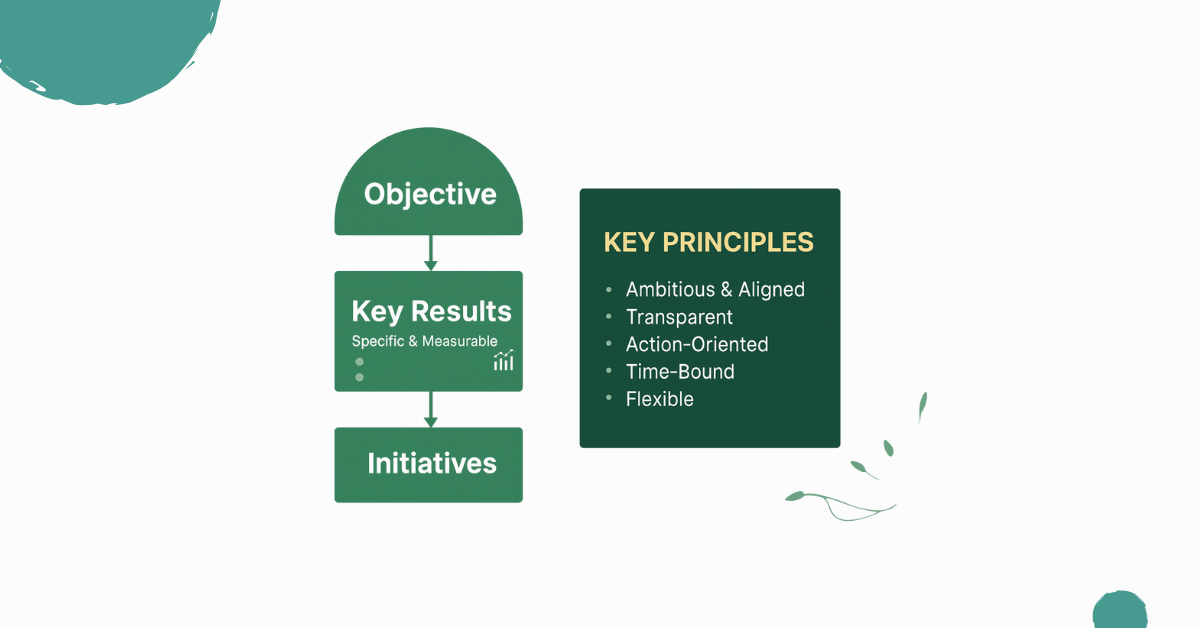
The OKR framework has three components:
Objective: A clear and meaningful goal.
Key Results: Measurable outcomes that show success.
Initiatives: Actions taken to achieve Key Results.
Example:
Objective: Improve employee onboarding experience.
Key Results:
• Reduce onboarding time from 10 to 5 days
• Increase new hire satisfaction to 90%
Initiatives:
• Create onboarding checklists
• Automate HR workflows
• Launch a buddy program
This structure keeps teams aligned and measurable.
How to Write Effective OKRs (Beginner-Friendly Guide)
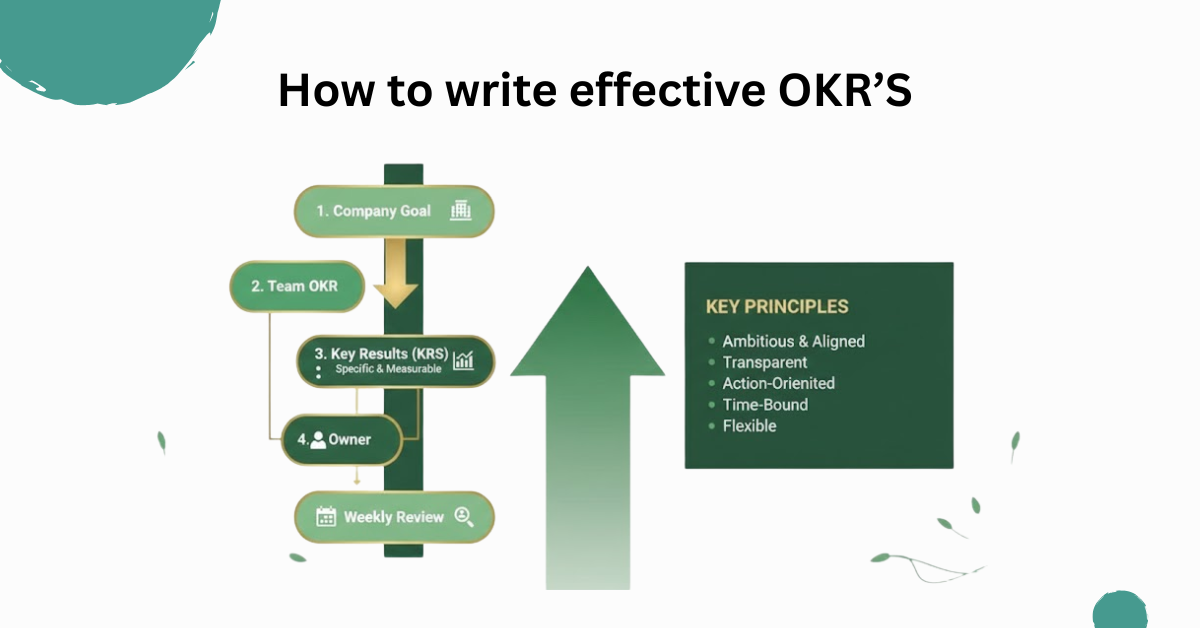
Start with company-level priorities and break them into team-level OKRs for alignment. Key Results must be specific, numeric, and time-bound. Avoid vague goals like “increase sales.” Use measurable outcomes such as “achieve ₹5 crore in quarterly revenue.”
Each OKR must have an owner responsible for progress. Weekly or biweekly check-ins help track blockers and keep goals active.
What Are the Best OKR Examples for Different Teams?
HR Teams
For HR teams, the goal framework focuses on employee experience and hiring outcomes. A common objective is to improve employee engagement, measured by increasing engagement scores to 85%, reducing voluntary turnover to 8%, and completing 95% of performance reviews. Another objective is to improve hiring efficiency by reducing hiring time to 20 days, increasing offer acceptance to 80%, and launching a digital onboarding system with 90% new-hire satisfaction.
Sales Teams
Sales targets are usually linked to revenue growth and customer relationships. A typical objective is to increase revenue, supported by results such as achieving ₹5 crore in new revenue, improving conversion rates to 30%, and generating 200 qualified leads. Another objective is to strengthen customer relationships by increasing renewal rates to 90%, conducting quarterly reviews with enterprise clients, and improving the Net Promoter Score (NPS) to 60.
Marketing Teams
Marketing goals usually focus on visibility and demand generation. An objective to boost brand awareness can include increasing website traffic by 40%, growing social media engagement by 50%, and generating 1,000 marketing-qualified leads. Another objective is to improve content performance by publishing 20 SEO-optimized blogs ranking in the top 10, increasing email open rates to 25%, and launching three campaigns with a 20% conversion rate.
Product & Engineering Teams
For product and engineering teams, objectives focus on reliability, speed, and user experience. A common objective is to improve product reliability by reducing bugs by 40%, increasing feature adoption to 70%, and maintaining 99.9% uptime. Another objective is to deliver new features faster by reducing the release cycle to two weeks, completing 90% of sprint goals on time, and improving deployment success to 98%.
OKR vs KPI: Simple Difference Explained

KPIs (Key Performance Indicators) track how well current processes are performing. They measure ongoing performance such as revenue, churn rate, or employee turnover.
The goal-setting framework (Objectives and measurable results) is used to drive improvement. It defines what you want to achieve and how success will be measured.
In simple terms:
• KPIs show where you are today
• Goals with measurable results show where you want to go next
KPIs focus on stability and control, while goal frameworks focus on change and progress. Both work best together — KPIs highlight what needs improvement, and goal-setting methods help teams act on it.
OKR Metrics, Scoring & Evaluation
-
Most organizations evaluate goal performance using a 0.0 to 1.0 scoring scale. Each measurable result is scored based on how much of it was achieved during the cycle.
Score meaning:
• 0.0 – 0.3 → Low progress
• 0.4 – 0.6 → Partial progress
• 0.7 – 1.0 → Strong progressA healthy score usually falls between 0.6 and 0.7, which shows the target was ambitious but realistic. A constant score of 1.0 often means the target was too easy.
For accurate evaluation, use both:
• Leading metrics — predict future success (for example, number of demos booked)
• Lagging metrics — measure final outcomes (for example, revenue achieved)Balancing leading and lagging metrics gives a clearer performance picture and helps teams improve results in the next cycle.
OKR Hacks for Better Results
To improve goal execution and performance tracking, follow these proven practices:
-
Write measurable Key Results only — avoid vague or activity-based statements.
-
Focus on outcomes, not tasks — success should be measured by results, not effort.
-
Limit goals to 3–5 per team — too many objectives reduce clarity and impact.
-
Review progress weekly, not monthly — frequent check-ins support faster course correction.
These performance measurement techniques and practical methods make evaluation easier and more effective. When teams understand how to score and adjust goals, they improve accountability, alignment, and overall execution — turning goal management into a growth driver for the organization.
Common OKR Mistakes & Best Practices
Many organizations struggle due to weak structure and inconsistent tracking. A common mistake is setting too many objectives, which reduces focus and makes priorities unclear. Another frequent issue is writing unmeasurable results, making progress difficult to assess.
Teams also confuse tasks with outcomes by listing activities instead of measurable results. For example, “conduct training” is a task, not an outcome. Lack of regular review is another major problem — when progress is not checked frequently, momentum is lost.
Best practices for effective execution include:
-
Limiting goals to 3–5 per team to maintain focus
-
Writing measurable, outcome-based results
-
Assigning clear ownership to each objective
-
Reviewing progress weekly or biweekly
-
Keeping goals visible and transparent across teams
Avoiding these mistakes helps goals remain actionable, aligned, and effective.
Why Use OKR Software & How HRMS Helps
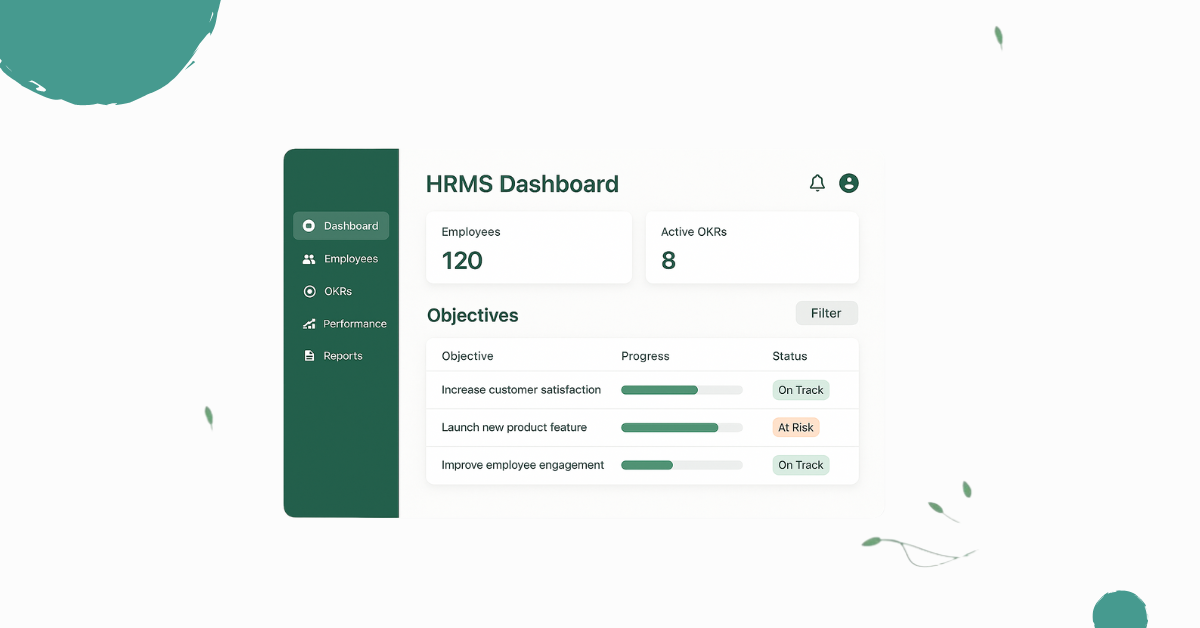
As organizations grow, managing OKRs manually using spreadsheets becomes difficult and inefficient. OKR software simplifies goal tracking by providing real-time progress visibility, automated updates, and structured dashboards.
OKR tools help organizations by:
-
Tracking Key Results in real time
-
Showing alignment between company, team, and individual goals
-
Sending reminders for updates and reviews
-
Reducing manual reporting and follow-ups
When OKRs are integrated with an HRMS, goal tracking connects directly with performance management. Managers can link OKRs with appraisals, feedback, and development plans, creating a continuous performance cycle.
An HRMS with OKR features helps organizations:
-
Improve accountability
-
Increase goal clarity
-
Strengthen performance reviews
-
Align employee effort with business goals
Using OKR software inside an HRMS makes goal management easier, more transparent, and more measurable.
Summing up
Objectives and Key Results have become one of the most practical frameworks for organizations that want clarity, alignment, and measurable outcomes. By understanding the meaning, structure, and application of this framework, teams can stay focused on what truly drives business impact. Whether you’re comparing it with KPIs, exploring real team examples, or learning how scoring works, the goal remains the same — create goals that lead to real results, not just activity.
As companies move into 2026, this approach continues to evolve through better metrics, smarter tools, and smoother integration with HRMS platforms. When implemented correctly, it can strengthen company culture, improve performance, and help teams execute with purpose. If you want more clarity and structure in your goal-setting process, this is one of the simplest and most effective places to start.
FAQs
What does OKR stand for?
It stands for Objectives and Key Results, a framework used to set and measure goals.
What is the difference between OKRs and KPIs?
KPIs track ongoing performance, while goal frameworks like OKRs focus on improvement and growth.
How many goals should a team set per cycle?
Most teams should set 3 to 5 objectives per cycle to stay focused and effective.