What is HRMS ?
A Human Resource Management System (HRMS) is software that helps organizations manage employee data and automate core HR processes in one centralized system.
An HRMS replaces manual tasks such as spreadsheets and paperwork with digital workflows for HR operations.
What does and HRMS do?
An HRMS is used to:
• Store and manage employee records
• Automate payroll processing and salary calculations
• Track attendance, leave, and working hours
• Support recruitment, onboarding, and exit processes
• Manage performance and training records
• Generate HR and compliance reports

How does an HRMS Work?
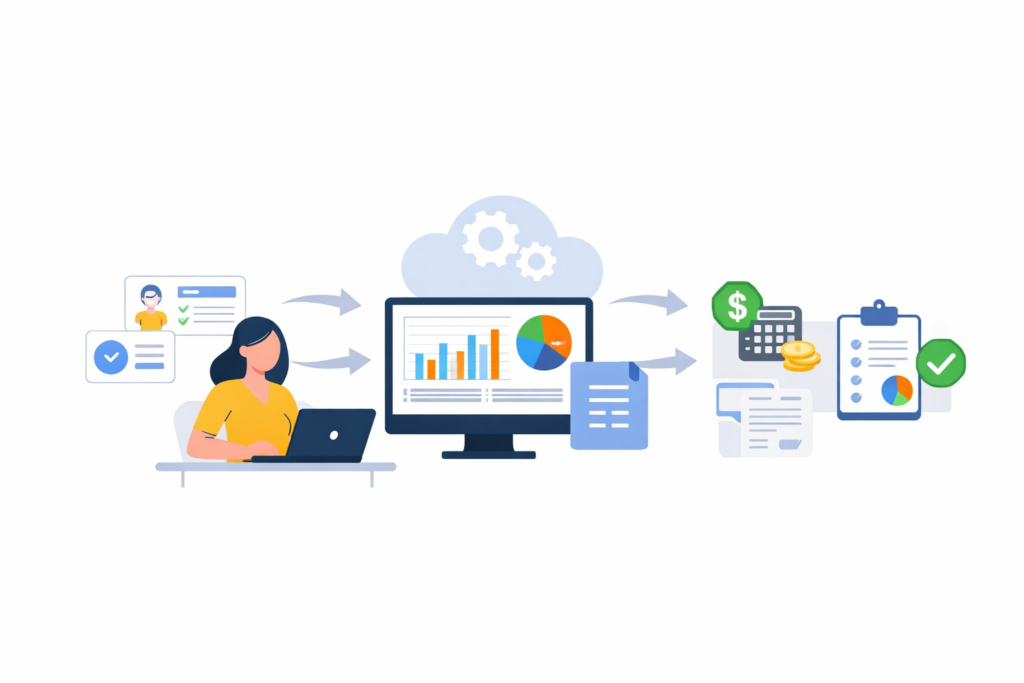
An HRMS works by connecting employee data, attendance, and payroll into a single workflow:
Employee details are recorded in the system
Attendance and leave are tracked automatically
Payroll calculations are generated using predefined rules
Payslips and reports are created digitally
Example Payroll Processing without v/s with HRMS
Factor
- No of employees
- Attendance tracking
- Salary Calculation
- Payroll processing time
- Error Risk
- Payslip generation
Without HRMS (Mannual)
- 50
- Enterned manually in spreadsheets
- Based on manual Excel formulas
- 2–3 working days
- High due to manual entry
- Created individually
With HRMS
- 50
- Captured automatically
- Calculated using system rules
- Few hours
- Low due to automation
- Generated automatically
Salary = (Base Salary × Actual Working Days / Total Working Days) – Statutory Deductions
Benefits of using an HRMS
• Reduces repetitive HR tasks by automating attendance, payroll, and record updates
• Improves salary accuracy through rule-based calculations
• Centralizes employee records in a single digital system
• Supports statutory compliance with structured payroll workflows
• Shortens monthly payroll processing time and reduces dependency on spreadsheets

HRMS and Compliance
An HRMS supports payroll compliance by applying statutory calculation rules and maintaining structured payroll records.
It typically helps manage:
• Provident Fund (PF) contributions
• Employee State Insurance (ESI) deductions
• Professional Tax (PT) as per state rules
• Income Tax (TDS) on salaries
By automating these deductions and generating compliance-ready reports, an HRMS reduces the risk of calculation errors, late adjustments, and regulatory penalties.
FAQ's
An HRMS is used to manage employee data and automate HR tasks like payroll, attendance, and compliance.
No. Payroll software handles only salary processing, while HRMS manages payroll along with employee records and attendance.
An HRMS calculates salaries automatically based on attendance and predefined rules and generates payslips.
Yes. HRMS is commonly used by startups and small businesses to manage HR and payroll digitally.
No. HRMS automates routine work, but HR staff still handle decisions and employee management.