
What Really Happens When You Leave a Company
Full and final (FNF) settlement clears all your pending salary, benefits, and deductions after you leave a company. It includes your last salary, leave balance, bonuses, and any deductions like notice pay or loans.
On your last working day, you expect to receive your full salary. But the final payout often looks different. Some payments are delayed. Some amounts are deducted. This happens due to notice period recovery, leave balance, tax adjustments, and internal approvals. Most employees realise this only at the end — and that’s where full and final settlement comes in.
Start payroll for free
FNF Settlement Meaning, Applicability and Timeline
Full and final (FNF) settlement is when a company clears all payments due to an employee after they leave. It includes pending salary, benefits, and final deductions.
This applies in all exit situations, including resignation, termination, or contract completion. Once the employment ends, the company calculates the total amount payable and adjusts any dues.
In most cases, this process is completed within 30 to 45 days from the last working day. The exact timeline may vary based on company policy, approvals, and payroll cycles.
Why Your Final Salary Looks Different Than Expected
You expect your last salary to match your usual pay. But the final amount often looks different. This gap between expectation and actual payout is common, and it usually comes from a few adjustments made during exit.
One major reason is notice period recovery. If you do not serve the full notice, the company deducts the shortfall from your final payout. Unpaid leaves also reduce your salary, since those days are not counted as paid work. Bonus eligibility can affect the amount too. If the bonus is linked to performance cycles or company policy, you may receive only a part of it or nothing at all.
Tax deductions also play a role. In many cases, final settlement includes tax adjustments based on your total annual income. This can increase deductions in your last payout. Along with this, internal approvals and payroll calculations can further change the final number.
For example, imagine your monthly salary is ₹50,000. You expect a full payout. But if you have five unpaid leave days, a short notice period, and tax adjustments, your final amount may drop to ₹35,000 or less. This can feel unexpected if you are not aware of these factors.
Most employees only realise these changes when they see their final payslip. Understanding these factors early helps avoid confusion and gives you a clearer idea of what to expect from your final settlement.
What Gets Included, What Gets Deducted
Your FNF settlement is not just your last salary. It is a combination of all earnings and deductions calculated at the time of exit. This is why the final amount often looks different from what you expect.
What You Receive in FNF Settlement
These are the amounts added to your final payout:
- Pending salary
Payment for the days worked in your last month - Leave encashment
Payment for unused paid leaves, based on company policy - Bonus
Paid only if you meet eligibility conditions - Gratuity
Applicable if you complete the required years of service
What Gets Deducted from Your Final Amount
These are the common deductions:
- Notice period shortfall
Deducted if full notice is not served - Company assets
Charges may apply if assets like a laptop or ID card are not returned - Loans or salary advances
Any pending amount is adjusted in the final payout
What Employees Expect vs What Actually Happens
Most employees expect to receive their full last salary along with all benefits. But the actual payout is calculated after adjusting leaves, notice period, and other dues. Bonus payments depend on eligibility and timing, and deductions are applied before the final amount is processed.
How FNF Settlement Is Calculated (With Example)
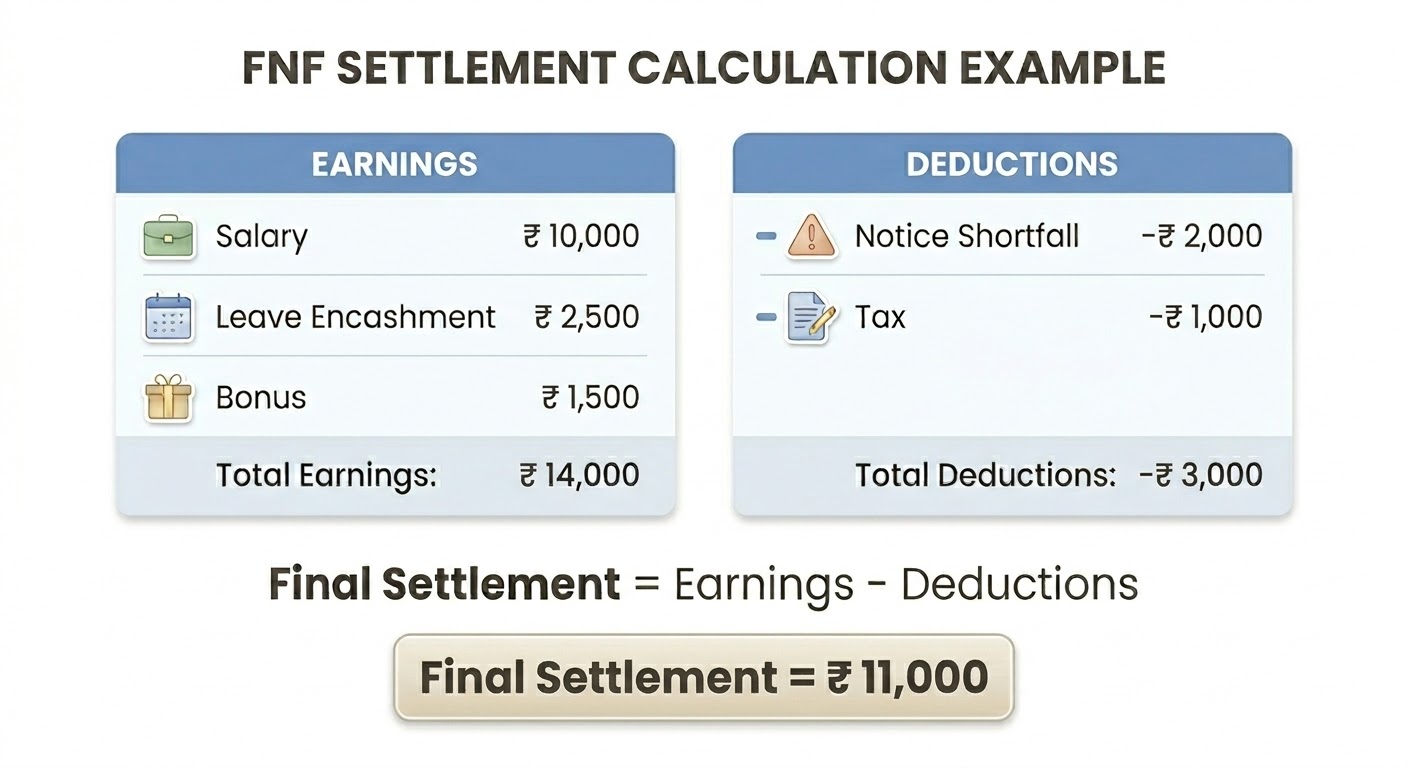
Your FNF is calculated by combining all your earnings and subtracting all deductions at the time of exit. This is why the final amount often looks different from what you expect to receive.
FNF settlement is calculated by subtracting total deductions from total earnings.
The calculation is simple:
Final Settlement = Total Earnings – Total Deductions
Your total earnings include pending salary for days worked, leave encashment, bonus if applicable, and gratuity if you are eligible. At the same time, deductions are applied for notice period shortfall, unpaid leaves, loans or advances, and final tax adjustments. The final payout is the balance after these adjustments.
To understand this clearly, here is a simple example:
| Category | Salary | Leave | Bonus | Deductions | Final (₹) |
| Amount (₹) | 40,000 | 10,000 | 5,000 | -15,000 | 40,000 |
Final Settlement = ₹55,000 – ₹15,000 = ₹40,000
In many cases, small details are missed. Leave balance may not match your expectation, notice period recovery can reduce the amount, and bonus may depend on company policy. Final tax adjustments can also impact the payout.
Understanding this calculation helps you clearly see how your final amount is arrived at and avoids confusion at the time of settlement.
FNF Settlement Process, Delays and What You Should Check
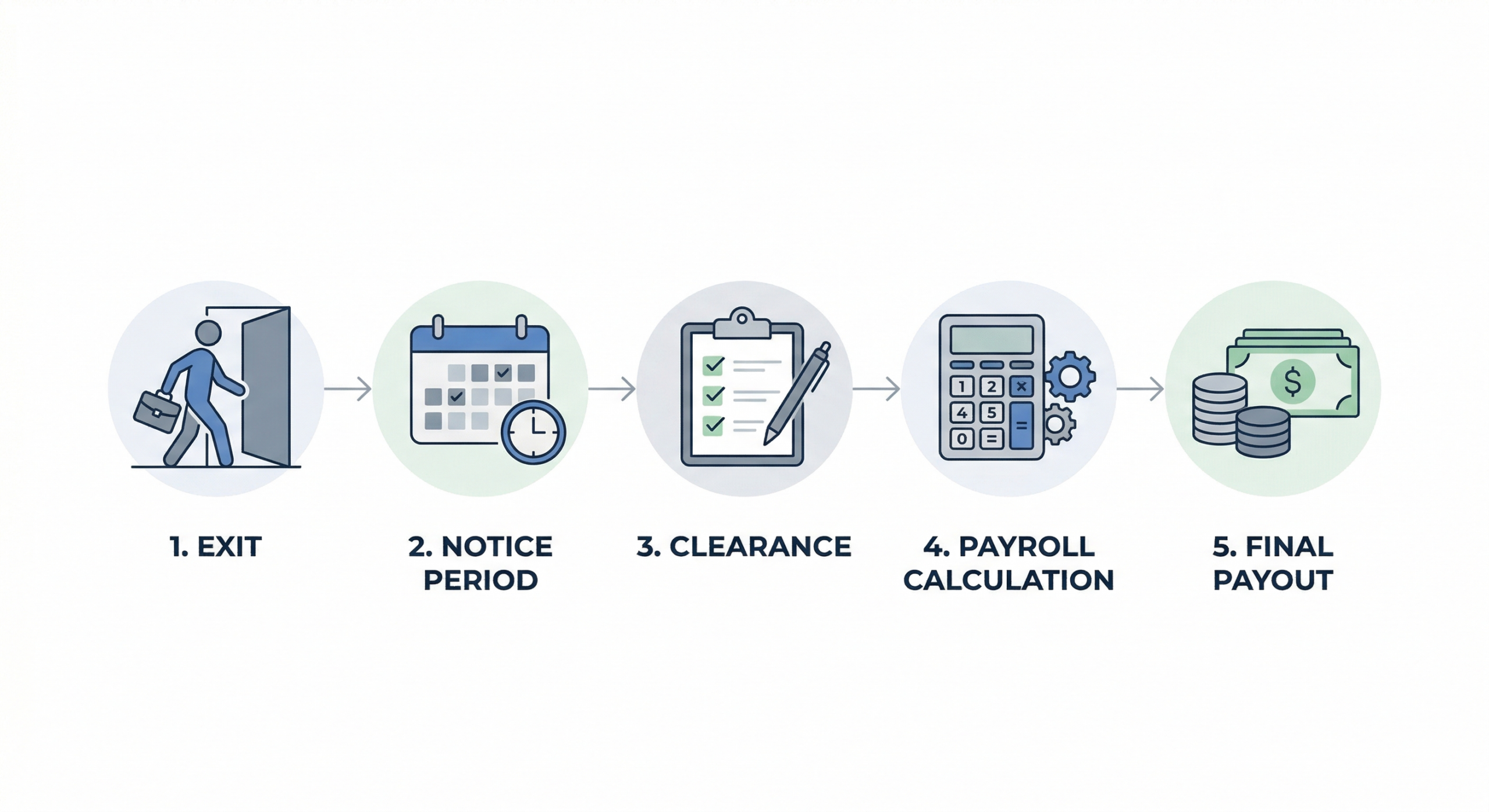
It starts after your last working day and moves step by step until the final payout. The process usually follows this order: exit, notice period, clearance, payroll calculation, and payout. Once your notice period is completed, the company begins clearance by checking if any assets or dues are pending. After clearance, payroll calculates your final earnings and deductions. Once approvals are completed, the final amount is processed and paid.
Where Delays Happen
Delays in FNF settlement usually happen during approvals, clearance, or payroll cycles. If any team has not completed clearance or approvals are pending, the process can slow down. Payroll timelines can also affect when the payment is released. In most companies, completing FNF settlement within 30 to 45 days is normal. If it goes beyond this without a clear reason, it is considered a delay and should be followed up.
What You Should Check
Before accepting your final payout, check your salary Structure in India breakup to understand how the amount is calculated. Review all deductions, including notice period recovery, leave adjustments, and tax. Make sure you receive important documents such as your relieving letter, final payslip, and settlement sheet. These confirm that your exit and settlement are complete.
If there is any delay or mismatch, follow up with HR or your manager and ask for a clear explanation. Keep a record of your communication. Checking these details helps you avoid confusion and ensures your final settlement is correct.
Common Mistakes Employees Make
- Not checking the final payslip
Most employees focus only on the final amount and ignore how it is calculated, which makes deductions unclear. - Ignoring tax adjustments
Final payouts may include higher tax deductions based on total annual income. - Not understanding notice period recovery
If the full notice period is not served, the shortfall is deducted from the final amount. - Not tracking leave balance
Employees often assume a higher leave encashment than what is actually available.
How to Avoid Issues in FNF Settlement
- Review your payslip and settlement breakup
Check all components before accepting the final amount. - Understand notice period terms early
Know how much will be deducted if the notice period is not completed. - Track your leave balance
Confirm how many days will be encashed. - Discuss payout with HR before exit
This helps you understand what to expect and avoids last-minute surprises.
Avoiding these mistakes helps you receive the correct final amount without confusion and ensures your FNF settlement is accurate and transparent.
Conclusion
FNF settlement is the final step when you leave a company. It clears your pending salary, benefits, and deductions based on your exit details.
The final amount may look different from what you expect due to factors like notice period recovery, leave balance, and tax adjustments. Understanding how FNF is calculated and processed helps you avoid confusion and check your payout correctly.
Before accepting your final settlement, always review your payslip, deductions, and documents. If anything is unclear, it is better to ask for clarification.
Being aware of the process ensures your FNF settlement is accurate, transparent, and completed without delays.
Frequently Asked Questions (FAQ)
What is FNF settlement?
It is the final payment made after you leave a company. It includes pending salary, benefits, and deductions.
How long does FNF settlement take in India?
However is usually completed within 30 to 45 days after the last working day, depending on company policy and approvals.
What is included in FNF settlement?
It includes pending salary, leave encashment, bonus if applicable, and gratuity if eligible, along with deductions like notice pay and tax.
Why is my final settlement amount lower than expected?
The final amount may be lower due to notice period recovery, unpaid leaves, tax deductions, or bonus eligibility conditions.
Can FNF settlement be delayed?
Yes, delays can happen due to approvals, clearance, or payroll cycles. If it exceeds the usual timeline, you should follow up with HR.