The moment companies realise they need a code of conduct
Most companies do not create a code of conduct at the beginning. Trust and common sense feel sufficient. However, one uncomfortable situation often changes that assumption. A joke in a team chat crosses a line, a manager speaks sharply, or favoritism becomes visible. At that moment, the issue is no longer just behaviour but uncertainty about how to respond.
Different people react differently, and HR hesitates because no shared reference exists. Decisions begin to depend on personal judgment instead of clear expectations. That shift usually marks the turning point. A code of conduct becomes necessary when consistency disappears. It provides a common standard before small conflicts develop into culture problems.
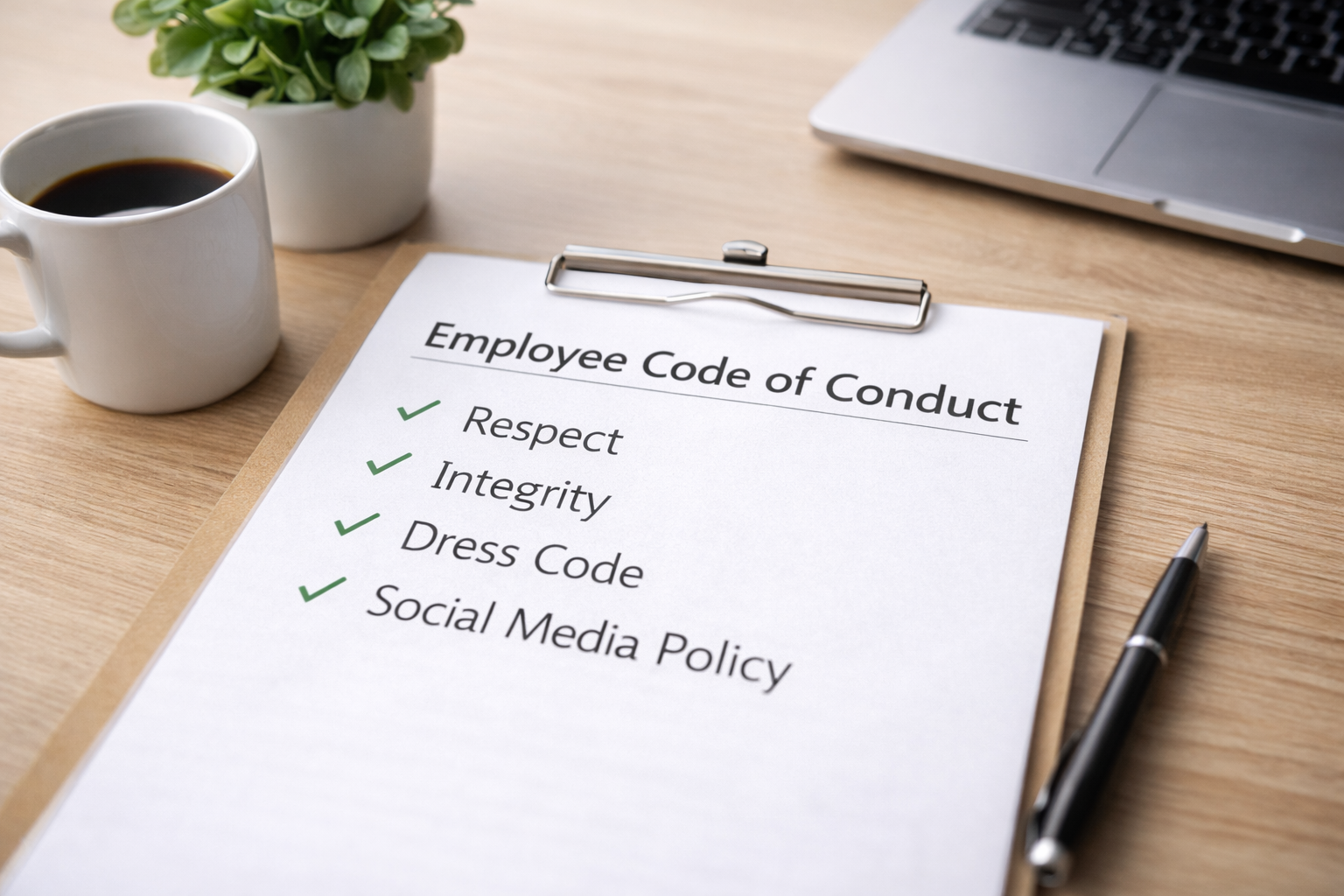
What a code of conduct actually solves in a workplace
A code of conduct does not control employees. It removes decision confusion for managers.
Workplace problems rarely start with serious misconduct. More often, they begin with small situations that receive inconsistent responses. A comment feels inappropriate to one person yet harmless to another. One employee is corrected, while similar behaviour elsewhere goes unnoticed. Over time, inconsistency becomes the real issue.
When expectations remain unclear, decisions appear personal or biased. Managers hesitate, unsure whether they are reacting too strongly or too lightly. Gradually, repeated variation in response weakens trust. A clear code replaces interpretation with shared agreement. Because standards are defined in advance, managers apply the same logic each time. As a result, discussions remain objective and workplace policy culture stays stable instead of shifting with individual judgment.
The right stage to introduce a code of conduct
A company typically needs a code of conduct between 15 and 30 employees, when behaviour stops being predictable.
In the early stage, familiarity guides actions. Team members know each other well, so issues resolve informally.HR Policies Rules feel unnecessary because shared understanding already exists. Growth, however, changes that dynamic. New employees were not part of earlier conversations, so they rely on observation rather than shared history.
Gradually, interpretations begin to differ. One manager addresses behaviour that another overlooks. Nothing dramatic happens, yet consistency weakens. Around twenty to thirty employees, decisions start affecting people who lack personal context. Misunderstandings take longer to resolve, and culture shifts from instinct to opinion. When someone asks, “What is the rule here?” and no one answers confidently, written guidance becomes essential.
| Company Size | Behaviour Pattern | Need Level |
|---|---|---|
| 5–10 | Personal familiarity guides action | Low |
| 15–25 | Mixed interpretations appear | Emerging |
| 25–50 | Neutral reference required | High |
| 50+ | Legal and cultural exposure increases | Essential |
At this stage, documenting expectations protects the original culture rather than restricting it.
What belongs in a practical code of conduct
A practical code of conduct should help employees decide what to do when a situation feels unclear. Instead of repeating company values, it should define behavioural expectations and response paths.
Behaviour boundaries
Clarify where respectful interaction ends and discomfort begins. Define contrasts such as respectful feedback versus public criticism, humour versus harm, and disagreement versus hostility. Clear contrast reduces interpretation.
Authority behaviour
Explain how managers should communicate instructions and apply standards. Clarify when employees may question decisions and when escalation becomes appropriate. This prevents confusion between leadership and misuse of authority.
Conflict handling process
Provide a simple sequence:
Discuss → clarify → document → escalate.
When the first step feels predictable, emotional reactions decrease and resolution becomes easier.
Reporting path
State clearly who employees can approach, including alternatives if a concern involves a manager. Mention confidentiality expectations and realistic response timelines.
Consequence logic
Describe how situations are evaluated using severity, repetition, intent, and impact. Consistency builds trust more effectively than strict punishment.
Why most code of conduct policies lose relevance over time
Most companies do not fail at drafting a code of conduct. They fail at keeping it relevant.
At first, the document receives attention. Employees read it during onboarding and acknowledge it. Later, daily work takes priority. The first gap appears when minor issues are handled informally without referencing the code. From that point onward, behaviour slowly returns to personal judgment.
Eventually, the policy surfaces only during serious situations. Because it was not applied to smaller issues, enforcement feels reactive rather than consistent. Legal language further distances the document from real conversations, making managers reluctant to rely on it. Over time, employees hesitate to report concerns because they cannot predict outcomes.
Long-term effectiveness depends on everyday application. When managers reference the code during small discussions, expectations remain clear before problems escalate.
Making a code of conduct work in real life
Employees follow a policy they understand, not one they sign.
Introducing the document as a form limits its impact. Instead, begin with discussion. Present real scenarios during team meetings and explain how expectations apply to daily work. Employees connect more easily with examples than with formal language.
Next, demonstrate application. Walk through a short situation and explain the response path. Predictability builds confidence. Reinforce the code during regular interactions, not only during disciplinary moments. Familiar language strengthens recall and reduces personal interpretation.
Finally, keep access simple and visible. Before asking employees to acknowledge the document, spend a few minutes discussing one practical example together. When expectations feel relevant, adherence becomes natural.

FAQs
1. Is a code of conduct mandatory for companies?
Not legally mandatory for all businesses, but required once compliance, harassment prevention, or disciplinary consistency becomes necessary. Most companies introduce it while scaling.
2. Who should follow the code of conduct?
Everyone working with the organisation — employees, managers, interns, contractors, and leadership — without exception.
3. What happens if someone violates the code of conduct?
Action depends on severity, repetition, intent, and impact. It can range from guidance to formal disciplinary action.
4. How often should a code of conduct be updated?
Review at least once a year or whenever team size, structure, or working methods change.