Introduction: Why CHRO Credibility Matters More Than Ever
 Leadership trust often forms before explanations begin.
A single payroll escalation, 2–3 follow-up clarifications, or delayed attrition data can quietly weaken CHRO credibility.
CHROs backed by an HRMS reduce these moments by keeping data ready, payroll clean, and compliance always prepared.
The role of the CHRO has evolved far beyond traditional people management. Today’s CHRO is expected to operate as a business leader — shaping workforce strategy, managing risk, and enabling growth. As expectations from CEOs, boards, and investors increase, credibility has become central to effective CHRO leadership. Decisions are scrutinized, data is demanded, and outcomes matter. In this environment, credibility is built through accurate insights, timely decisions, and consistent delivery. An HRMS plays a critical role here — not as a transactional system, but as a foundation that enables CHROs to lead with clarity, confidence, and measurable impact across the organization.
What Defines Credibility for a Modern CHRO?
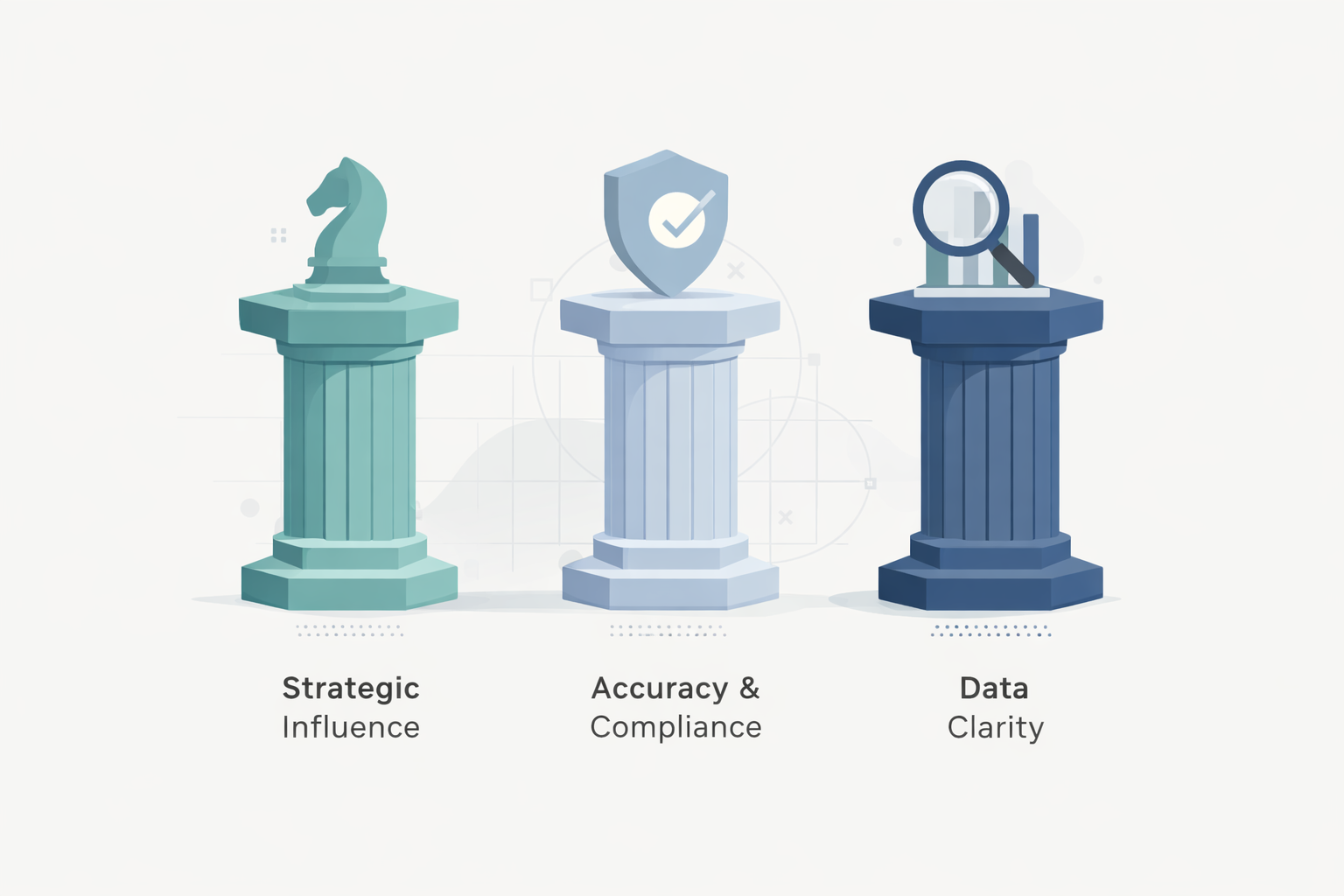
Credibility for a modern CHRO is defined by influence, reliability, and clarity — not by how efficiently routine tasks are managed. As organizations scale and workforce decisions directly impact business outcomes, CHRO responsibilities extend beyond operations into strategic leadership. Senior leaders expect HR to guide decisions on talent, costs, and organizational structure, not simply execute processes.
A credible CHRO demonstrates strategic influence by aligning people initiatives with business priorities. Workforce planning, retention strategies, and performance frameworks must clearly support growth, productivity, and risk management goals. This alignment signals that HR understands the business, not just the workforce.
Equally important is accuracy and compliance. Consistent data, dependable payroll, and audit-ready processes build trust with leadership and employees alike. Errors or ambiguity quickly weaken confidence in HR leadership.
Finally, credibility is reflected in the CHRO’s ability to respond to leadership questions with confidence — supported by data, context, and clear reasoning. When HR decisions are transparent and defensible, the CHRO is seen as a trusted advisor, setting the foundation for the five practical ways an HRMS strengthens credibility in day-to-day leadership.
1️⃣ When leadership asks why attrition is rising, the CHRO already has the answer
The real challenge
In many organizations, attrition becomes a leadership discussion only after it starts impacting performance or costs. At that point, CHROs are often required to consolidate data from spreadsheets, exit interviews, and multiple stakeholders — slowing response time and reducing confidence in the insights shared.
How an HRMS addresses this in practice
A centralized HRMS provides structured, real-time visibility into workforce movement through:
- Attrition dashboards segmented by team, role, tenure, and manager
- Standardized exit reason categorization instead of unstructured inputs
- Trend analysis across time periods and organizational units
Credibility impact
With immediate access to accurate and contextual data, the CHRO leads the discussion rather than reacting to it. Leadership perceives clarity, preparedness, and foresight — reinforcing trust in HR’s strategic capability.
2️⃣ When salary-related escalations do not reach leadership
The real challenge
Payroll issues, even minor ones, quickly escalate to senior leadership and often overshadow other HR initiatives. Manual processes, last-minute corrections, and fragmented data increase the likelihood of errors and delays, especially during salary cycles.
How an HRMS addresses this in practice
An HRMS standardizes and validates payroll inputs by:
- Integrating attendance, leave, and pay components into a single workflow
- Automating statutory deductions and calculations
- Ensuring consistent payslip generation and timely salary processing
Credibility impact
When salary cycles run smoothly without escalations, HR is seen as reliable and in control. Over time, this consistency strengthens leadership confidence in the CHRO’s operational oversight.
3️⃣ When compliance reviews do not create urgency or disruption
The real challenge
Compliance checks and inspections often trigger rushed data collection and internal follow-ups. Missing records or inconsistent documentation can expose the organization to legal and reputational risk, placing pressure on HR leadership.
How an HRMS addresses this in practice
A centralized HRMS ensures compliance readiness by:
- Maintaining complete and updated employee records
- Generating statutory reports aligned with applicable regulations
- Preserving historical data for audits and inspections
Credibility impact
The CHRO is viewed as proactive and dependable in managing compliance, reinforcing confidence among leadership and stakeholders during audits and reviews.
4️⃣ When employees trust the system instead of seeking clarifications
The real challenge
Repeated employee queries on payslips, leave balances, and policies can indicate a lack of transparency or consistency. Over time, this erodes confidence in HR processes and increases operational dependency on HR teams.
How an HRMS addresses this in practice
An HRMS improves transparency by:
- Providing employees with self-service access to accurate information
- Displaying real-time leave and attendance records
- Centralizing policy documents and payroll information
Credibility impact
As employees rely on systems rather than manual clarifications, trust in HR processes strengthens. This reflects positively on the CHRO’s leadership and governance of HR operations.
5️⃣ When the CHRO has the capacity to focus on strategic priorities
The real challenge
Significant time is often spent managing approvals, corrections, and follow-ups across HR operations. This limits the CHRO’s ability to engage deeply in long-term workforce planning and organizational initiatives.
How an HRMS addresses this in practice
By automating routine processes, an HRMS:
- Reduces manual intervention across HR workflows
- Flags exceptions instead of requiring constant monitoring
- Aligns HR data and processes within a single system
Credibility impact
With reduced operational burden, the CHRO can contribute more meaningfully to strategic discussions. Leadership recognizes this shift as a mark of mature and effective HR leadership.
How an HRMS Directly Impacts CHRO Perception at the Leadership Level

At the leadership level, CHRO perception is shaped less by intent and more by outcomes. CEOs and boards evaluate HR leadership in the same way they assess any other business function — through predictability, clarity, and the ability to execute without disruption. The modern CHRO is no longer judged solely on people initiatives, but on how effectively workforce decisions support business performance.
From a CEO’s perspective, a credible CHRO is one who can anticipate challenges rather than respond after issues surface. Questions around attrition, workforce costs, hiring readiness, and compliance exposure require clear, data-backed answers. An HRMS enables this by providing a single source of truth across workforce data, ensuring insights are accurate, timely, and defensible.
Predictability is another key factor influencing executive trust. When payroll runs consistently, statutory obligations are met on time, and employee-related issues do not escalate unexpectedly, HR is viewed as a stable and dependable function. An HRMS supports this consistency by standardizing processes and reducing reliance on manual intervention.
Most importantly, an HRMS strengthens execution. It allows CHROs to translate strategy into action — whether through workforce planning, performance tracking, or policy implementation — with minimal friction. As a result, HRMS-enabled CHROs are seen not as operational managers, but as business leaders who bring structure, foresight, and reliability to people decisions. This perception significantly elevates the CHRO’s standing in leadership discussions and strategic forums.
Choosing the Right HRMS as a CHRO
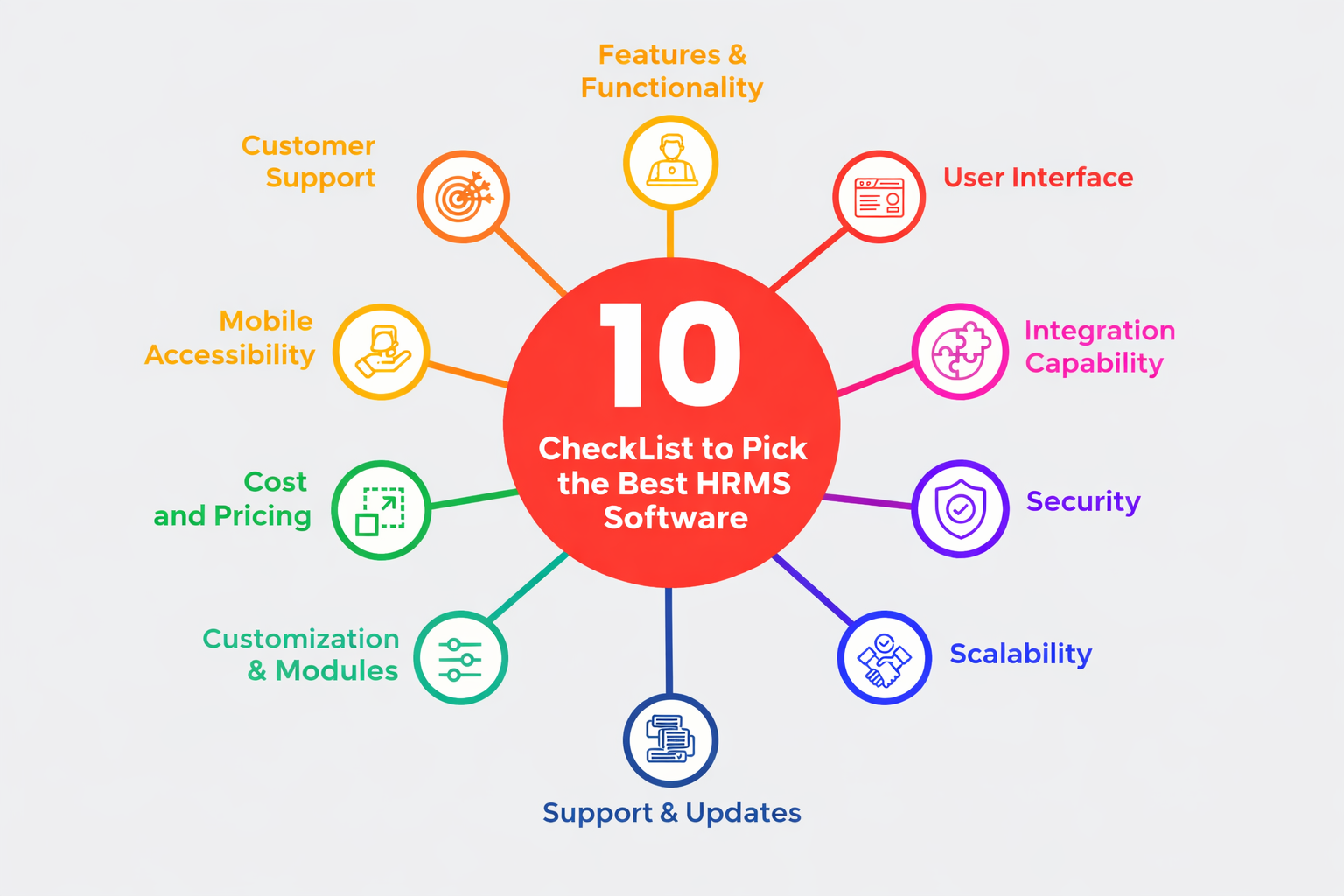
For a CHRO, selecting an HRMS is not a technology decision alone — it is a leadership decision that impacts credibility, scalability, and execution. The right HRMS must support growing teams without adding complexity, ensuring processes remain consistent as the organization expands across roles, locations, and workforce types.
In the Indian context, compliance readiness is non-negotiable. An effective HRMS must account for statutory requirements, state-specific rules, and frequent regulatory changes, reducing compliance risk and audit pressure on HR leadership.
Equally important is the depth of analytics. CHROs need more than reports — they need insights that help explain trends, anticipate challenges, and support decision-making at the leadership level. Systems that lack analytical clarity limit HR’s strategic contribution.
Employee adoption is another critical factor. If employees trust and use the system intuitively, transparency improves and HR dependency reduces. Finally, vendor reliability and support matter. A responsive, knowledgeable partner ensures continuity and confidence, reinforcing the CHRO’s ability to lead without disruption.
Conclusion: Credibility Is Built Daily — HRMS Makes It Visible
CHRO credibility is not built through intent or titles, but through consistent outcomes that leadership can see and rely on. From answering workforce questions with clarity to running payroll without disruption, staying audit-ready, enabling transparency, and creating space for strategic focus — credibility is demonstrated in everyday decisions and execution. An HRMS brings these elements together by making leadership impact visible, reliable, and repeatable. For CHROs shaping the future of work, the right HRMS is not an operational choice — it is a foundational leadership enabler.